
A person searching for “something to do in Leeds this Friday” may not yet know which play they want to see. This is a thought experiment, not a campaign I worked on: imagine a small theatre trying to reach them through organic search. I’d start with the occasion behind the search, then work backwards to the show.
Start with the evening
The theatre’s programme page serves people who already know a title, but it may not help someone choosing between a play, a comedy night and a meal out. A useful campaign would make the practical details easy to find: dates, start times, location, running time and whether tickets are still available. Those details answer real questions without pretending every visitor is ready to book.
Build pages around intent
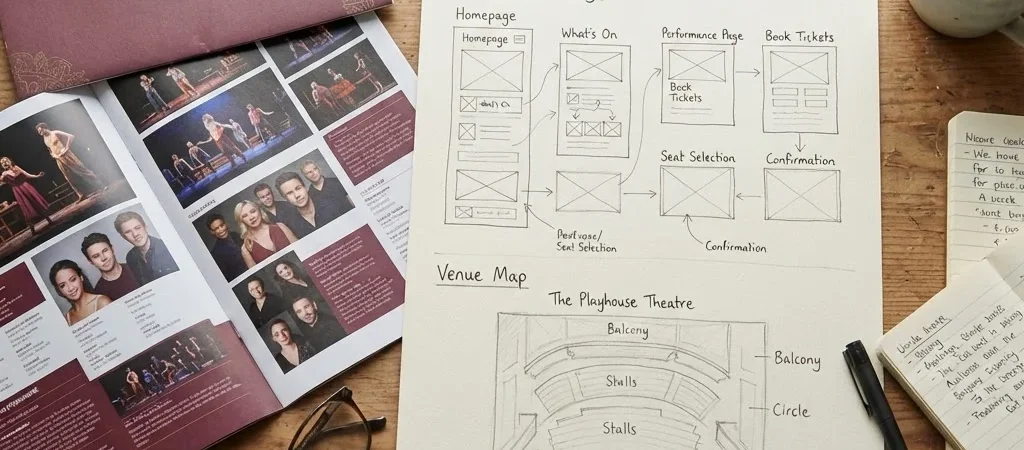
I’d keep the main programme page focused on the current season and create supporting pages only where there is a distinct audience need, such as family performances or accessible shows. Each page should offer a clear route to the relevant listings, rather than repeating a thin version of the same event copy. Search intent can guide the structure, but the venue’s actual programme has to earn the page.
Make the next step obvious
A search result that promises a relaxed evening is a poor match if the landing page hides the venue address or leaves the performance date unclear. I’d put the detail people need to decide near the top, then let them explore the production itself. The useful measure is not simply more visits; it is whether the right visitor can understand the offer and choose what to do next.